

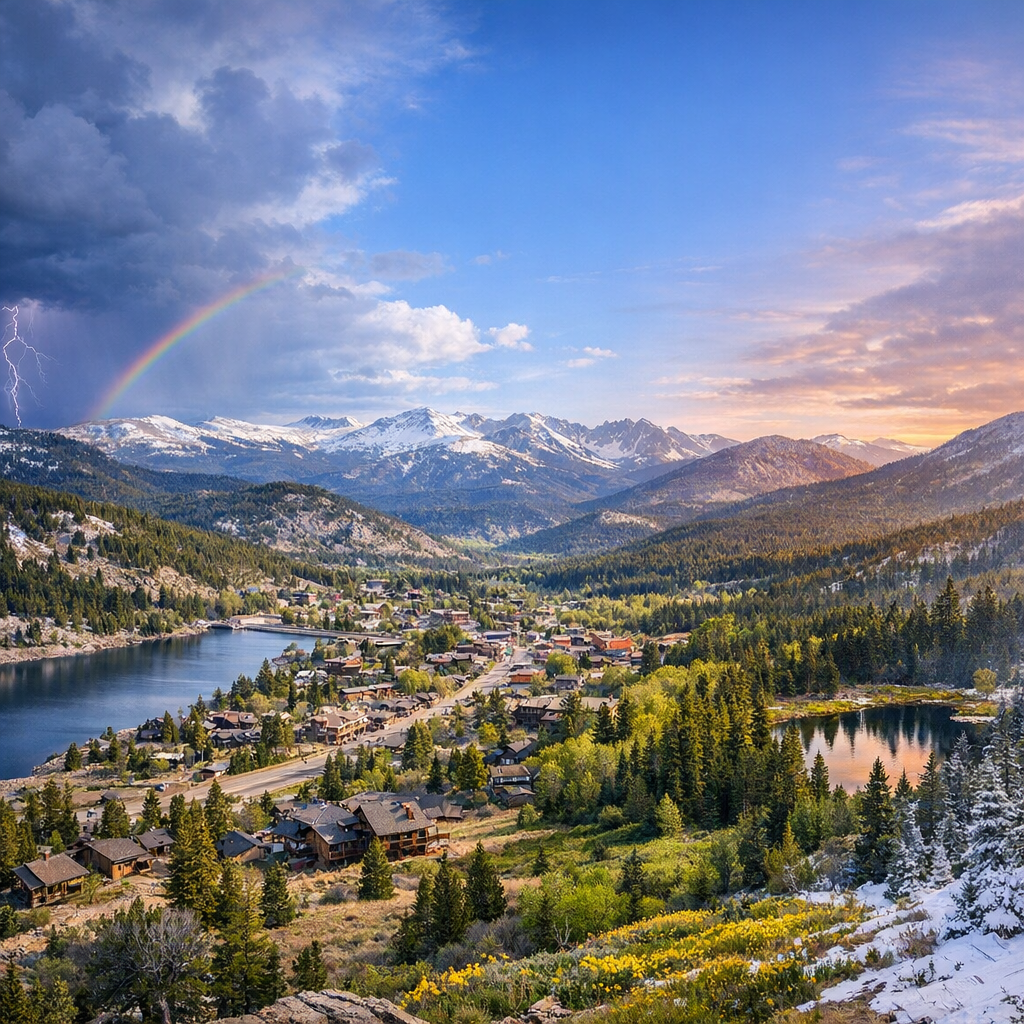
Nestled in the Rocky Mountains, Nederland, Colorado, experiences a unique alpine subarctic climate characterized by cool summers and cold, snowy winters. This climate influences various aspects of daily life and presents specific environmental challenges for our community.
Climate Overview
Throughout the year, Nederland’s temperatures fluctuate significantly. Average high temperatures range from approximately 35°F (1.8°C) in January to around 76°F (24.4°C) in July. Low temperatures can dip to about 15°F (-9.4°C) in winter months. Precipitation is fairly evenly distributed, with May typically being the wettest month, averaging around 2.84 inches (72.14 mm) of rainfall. Snowfall is common from October through April, contributing to our picturesque winter landscapes.
Environmental Considerations
Our mountainous terrain and climate conditions necessitate careful environmental management. The town’s Wastewater Treatment Plant, constructed in 2013, plays a crucial role in maintaining water quality by preventing hazardous waste from entering local waterways. Residents are encouraged to be mindful of what they dispose of down drains, as excess nutrients like phosphorus and nitrogen can lead to eutrophication in bodies of water, harming aquatic life and public health.
Air quality is another important concern. Regional haze, caused by fine particles from both natural sources like wildfires and human activities such as vehicle emissions, can reduce visibility and impact health. While Nederland’s air quality is generally good, it’s essential to remain vigilant, especially during wildfire season when smoke can affect the area.
Community Initiatives
Nederland is committed to sustainability and environmental stewardship. The town’s sustainability model emphasizes a holistic approach to community planning, aiming to balance economic and social needs within the limits of our natural environment. This includes promoting localized economies, fostering community resilience, and encouraging practices that harmonize human activities with our ecosystem.
Understanding and adapting to our unique climate and environmental challenges is vital for the well-being of our community. By staying informed and engaged, we can continue to thrive in our beautiful mountain home.