

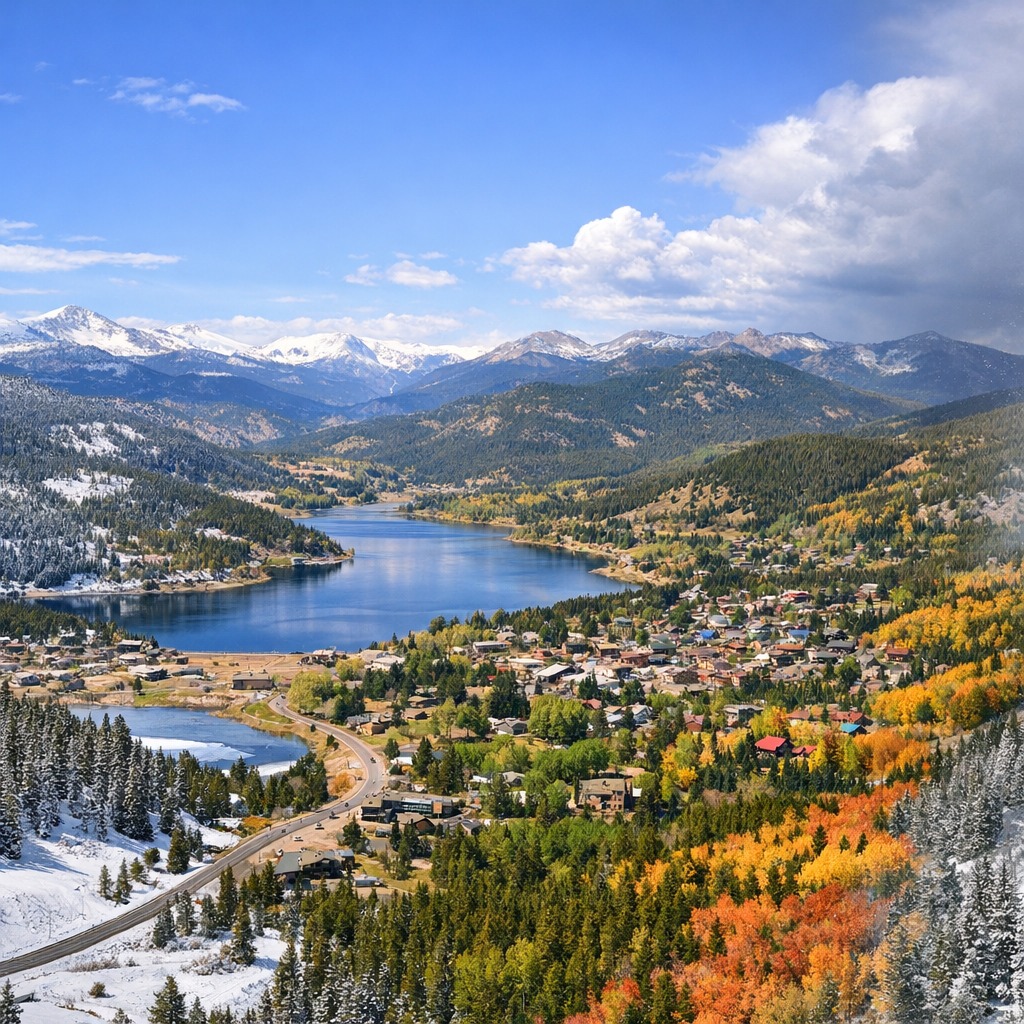
Nestled in the Rocky Mountains, Nederland, Colorado, experiences a distinctive alpine subarctic climate characterized by significant seasonal variations. Understanding these patterns is essential for residents to navigate daily life and environmental challenges effectively.
Seasonal Temperature Fluctuations
Throughout the year, Nederland’s temperatures exhibit considerable shifts. Average high temperatures range from approximately 30.7°F (-0.7°C) in January to 73.9°F (23.3°C) in July. Nighttime temperatures can be notably cooler, with averages dipping to 14.2°F (-9.9°C) in January and 49.6°F (9.8°C) in July. These fluctuations necessitate preparedness for both warm summer days and frigid winter nights.
Precipitation and Snowfall
Precipitation in Nederland is distributed throughout the year, with May typically being the wettest month, averaging 3.7 inches (94 mm) of rainfall. Snowfall is prevalent from October through April, peaking in April with an average of 16.54 inches (420 mm). This consistent snowfall contributes to the region’s snowpack, vital for water resources and local ecosystems.
Environmental Considerations
Living in Nederland requires awareness of environmental factors such as regional haze and climate change impacts. Regional haze, caused by fine particles from natural sources like wildfires and human activities, can reduce visibility and affect air quality. Additionally, climate change poses challenges including reduced snowpack, increased drought frequency, and heightened wildfire risks. These factors underscore the importance of community engagement in environmental stewardship and preparedness.
By staying informed about Nederland’s climate and environmental dynamics, residents can better adapt to seasonal changes and contribute to the sustainability of their community.